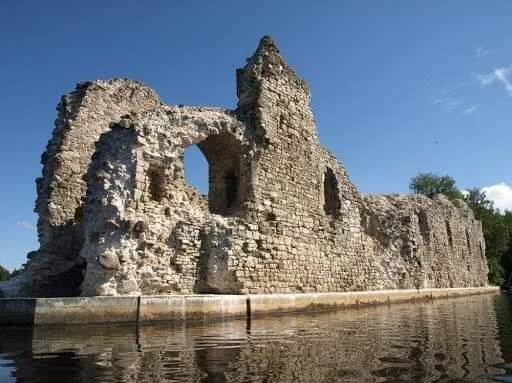

Kokneses castle ruins 1209 year
Châteaux & fortinsLettonie
Koknese Parish, LV-5113, Latvia
Aucun Explorateur n’a encore foulé ce lieu
Ce lieu t’attend sur la carte d’Explore, avec 3 521 autres sortis de l’oubli.
Découvrir ce lieu sur la carteGratuit, sans compte · offert par Runes de Chêne
À propos
Once upon a time, Koknese Castle stood majestically on a hill where the Perse River flows into the Daugava. Nowadays, after the construction of the hydroelectric power plant, water washes against the walls of its ruins. History of the castle In 1209, Bishop Albert built the stone castle to replace a former wooden castle that had been built by Latvians. In 1701, during the Great Northern War, Saxon cannon fire blew the castle up while withdrawing from the territory. Since that time the castle has survived as ruins. Until 1966 the castle ruins stood high on a hill, but its foundations were submerged into the rivers of Daugava and Perse after the Pļaviņas hydroelectric power plant was built on the Daugava.
 Lieu ajouté par Un Voyageur · le 15 mars 2021