
The standing stones at Grinde
HistoriqueNorvège
Fv515 117, 5570 Aksdal, Norge
Aucun Explorateur n’a encore foulé ce lieu
Ce lieu t’attend sur la carte d’Explore, avec 3 521 autres sortis de l’oubli.
Découvrir ce lieu sur la carteGratuit, sans compte · offert par Runes de Chêne
À propos
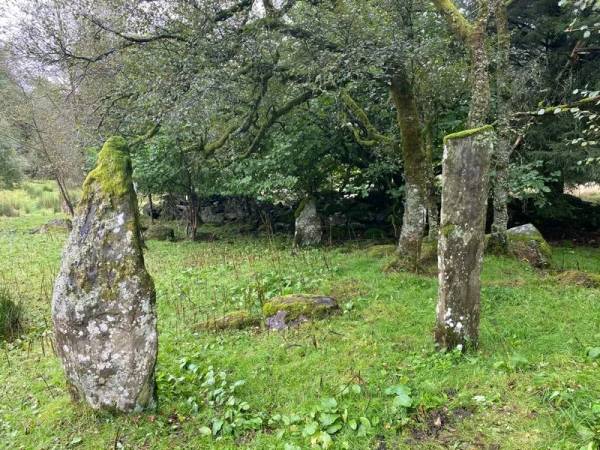
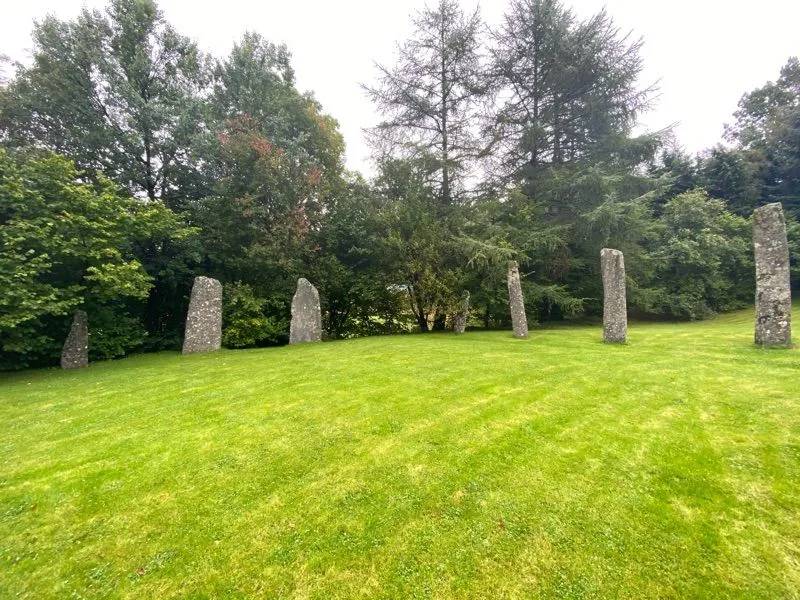
The standing stones were registered in 1919. At that time only one of the stones stood upright. The other 6 stones had been taken down and put to use as building material for bridges. The ancient monument was restored in 1952 by Jan Petersen. The stones were placed in two rows as straight angles to each other. The eastern row of stones are probably back in their original position whereas the northern row may have been replaced incorrectly. The stones 1.8 – 5,5 m high, 0.5 – 1.5 m wide and taper toward the top, a common shape for such stones. The ancient monument is called “Resasteinane” or “Sversteinane” and the ground where it stands, is named “Dukjen”. Removed grave cairn Prior to 1926 a now removed grave cairn lay to the east of the standing stones. The cairn held a ceramic vessel containing the ashes from a cremation. This was a fairly common burial practise in the early iron age (16 – 1700 years ago). It is an open question whether the standing stones are from the same period as the cairn. A stone quarry is situated at “Grindevatnet” about 550 m northeast of Dukjen. The standing stones at Dukjen may be from this quarry. You will find a similar group of 7 standing stones at the farm of Erland, 10 km east of Grinde.
 Lieu ajouté par Un Voyageur · le 12 octobre 2020